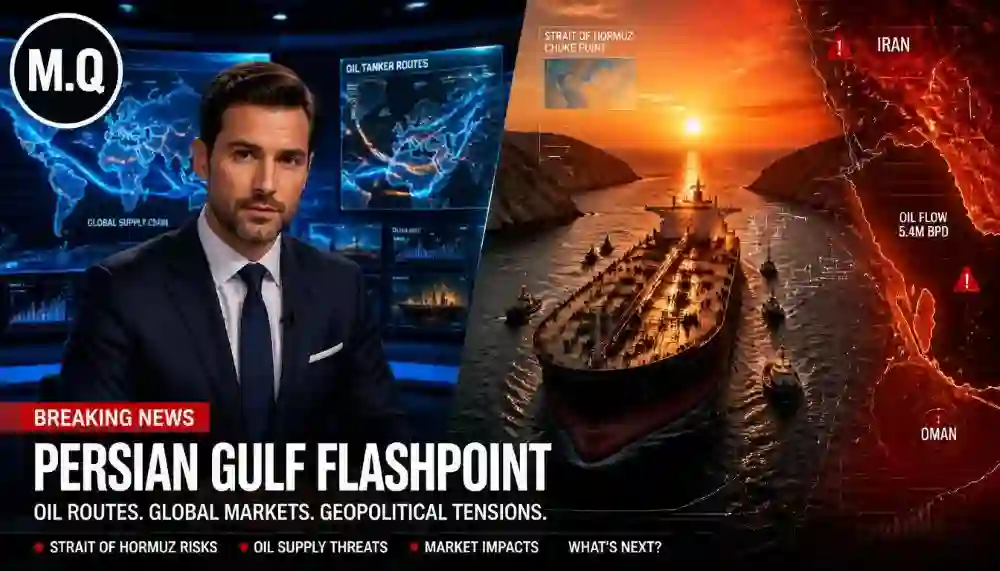
- Day 12 Escalation: Iran Threatens Gulf Energy Sites After Trump’s Tehran Warning as Strait of Hormuz Blockade Deepens
- Iran’s Counter-Threat: Gulf Infrastructure in the Crosshairs
- “No Oil for Anyone”: MB Ghalibaf Issues Severe Warning
- Ground Reality at Sea: Maritime Traffic Through the Strait of Hormuz Faces Major Disruptions
- Target Expansion: Power and Water Desalination Plants
- Global Supply Chains and Heavy Detour Costs
- Frequently Asked Questions
Day 12 Escalation: Iran Threatens Gulf Energy Sites After Trump’s Tehran Warning as Strait of Hormuz Blockade Deepens
Honestly, if you thought the geopolitical standoff in the Middle East couldn’t get any more intense, Day 12 of the US-Iran conflict proved everyone wrong. Both Washington and Tehran have escalated their rhetoric, moving beyond military deterrence to direct threats against each other’s economic lifelines.
Look, what we are watching right now is a dangerous game of tit-for-tat escalations. After President Donald Trump warned that US forces would bomb bridges and power plants in Tehran if commercial shipping was disrupted, Iran’s top leadership responded with a sharp warning of its own. A massive counter-threat aimed directly at the wider Gulf region.
Iran’s Counter-Threat: Gulf Infrastructure in the Crosshairs
Straight up, Iranian officials have made it clear that any US strike on Tehran’s home soil will trigger immediate retaliation across the Middle East. According to reporting by Al Jazeera, senior advisers in Tehran warned that Iran has officially entered a “new phase of deterrence” where the economic consequences of US military actions will be globalised.
Iranian Foreign Minister Seyed Abbas Araghchi reaffirmed that Tehran’s defence doctrine is rooted in the principle of “an eye for an eye.” He warned that any country assisting US military operations by providing bases or airspace would be viewed as a legitimate military target.
Furthermore, as highlighted in reports from ynet News, Iranian officials warned European and Gulf nations that offering territory or logistical support to American forces turns those countries into active combatants in the war.
“No Oil for Anyone”: MB Ghalibaf Issues Severe Warning
A careful examination of Tehran’s remarks points to a chillingly simple message for global energy markets. Iranian Speaker of Parliament Mohammad Baqer Ghalibaf issued a public statement clarifying Iran’s stance on regional oil exports and naval security. The equation of this war is clear: either all or none! If we cannot sell our oil in this region, then no one else will sell theirs. Ghalibaf warned that unless Iran’s security is ensured, no infrastructure would be safe, insisting that the strait’s security depends on American forces staying away.
Meanwhile, Iranian commentator Seyed Mohammad Marandi openly called on foreign residents to pack up and leave major Gulf states, specifically identifying Kuwait, Qatar, Saudi Arabia, Bahrain, the UAE, and Oman. and Oman. Former Iranian economy minister Seyed Ehsan Khandouzi also argued that consumers would continue facing $100-a-barrel oil until foreign troops withdrew from the region.
Ground Reality at Sea: Maritime Traffic Through the Strait of Hormuz Faces Major Disruptions
To be fair, while official statements from Washington insist that key trade corridors remain accessible, ground realities for maritime shipping tell a completely different story.
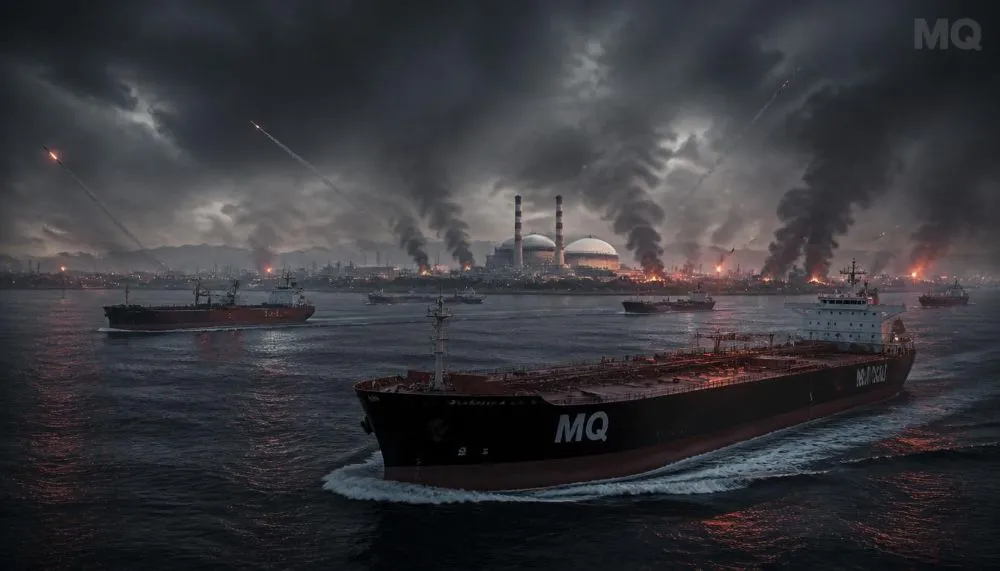
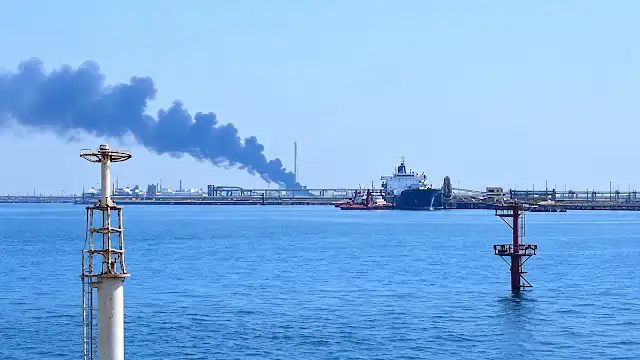
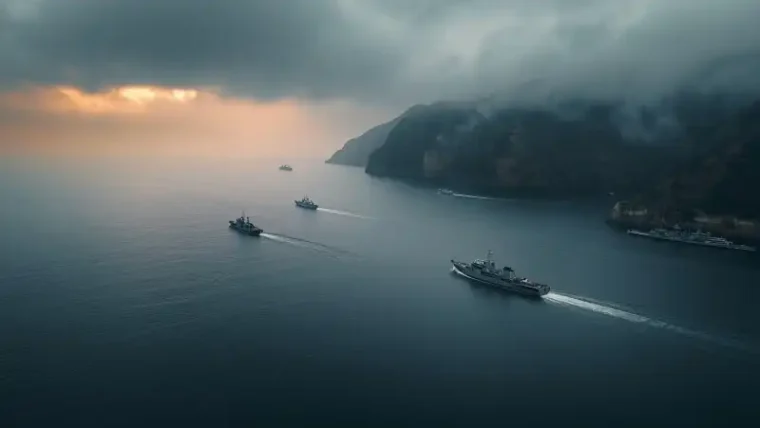
According to coverage by CBS News, maritime security experts and shipping insiders confirm that commercial vessel traffic through the Strait of Hormuz has come to a near-total standstill. While US Central Command (CENTCOM) reiterated assertions that the strait remains open for commercial navigation, shipping companies are simply refusing to risk their crews and multi-million-dollar vessels.
Dozens of Attacks Reported: CENTCOM acknowledged that Iranian forces have launched over 30 targeted strikes on commercial vessels over the past two weeks, making transit virtually uninsurable for shipping lines.
EU Security Alerts: European naval authorities continue to advise merchant ships tied to Western or Gulf interests to avoid the region entirely until military operations cool down.
Target Expansion: Power and Water Desalination Plants
As Al Jazeera points out, sources in Tehran suggest military planners are drawing up target lists aimed at regional energy grids, bridges, and water desalination plants linked to US partners.
Word is that power and water setups in Kuwait already took a hit during recent drone and missile intercepts, which upset GCC members quite a bit. Military experts warn that if desalination plants get hit directly, people living across the Gulf could face a massive water crisis fast.
Global Supply Chains and Heavy Detour Costs
Look, this standoff is no longer just a Middle Eastern headline—it’s directly threatening the price of goods in your local shop. Huge ocean carriers—Maersk, MSC, and Hapag-Lloyd included—have completely backed out of Red Sea routes.
Ships are now taking the long way around the bottom tip of Africa via the Cape of Good Hope, which brings serious extra expenses:
Adding two whole weeks at sea: Going around Africa adds almost 4,000 extra miles to normal Asia-to-Europe routes, keeping cargo stuck at sea up to 14 days longer.
Burning through extra fuel: Firing up thousands of extra barrels per trip means shipping lines are slapping heavy emergency fees on every container.
Risk Pay Surges: For the few operators still daring to approach Persian Gulf ports, shipping companies are forced to offer crew members up to six times their normal base pay to cover the extreme danger.
Frequently Asked Questions
What was Iran’s direct response to Donald Trump’s Tehran threats?
In short, Iranian leadership warned that if the US strikes targets inside Tehran, Iran responds by targeting power grids, water desalination plants, and energy infrastructure in Gulf countries hosting American forces.
Is the Strait of Hormuz actually open for commercial shipping?
Even though US CENTCOM claims the passage stays open, CBS News reporting confirms that almost no commercial operators are risking their ships in the area right now.
What did Iranian Speaker Ghalibaf say about global oil sales?
Mohammad Baqer Ghalibaf made it plain: if Iran gets blocked from selling its oil, Tehran makes sure no other country in the Persian Gulf exports crude either.
How does the Gulf conflict impact global energy prices?
With oil exports choked off at the Strait of Hormuz, market experts warn crude could easily climb past $100 a barrel, driving up gas prices and everyday shop items.
Why are ships rerouting around the Cape of Good Hope?
Carriers are dodging the Red Sea to keep their crews and ships safe from missile and drone attacks, even though taking the long way adds up to 14 extra days and huge fuel costs.
Disclaimer: This report is compiled for educational and informational purposes based on public diplomatic statements, official press releases, and major international news reporting.