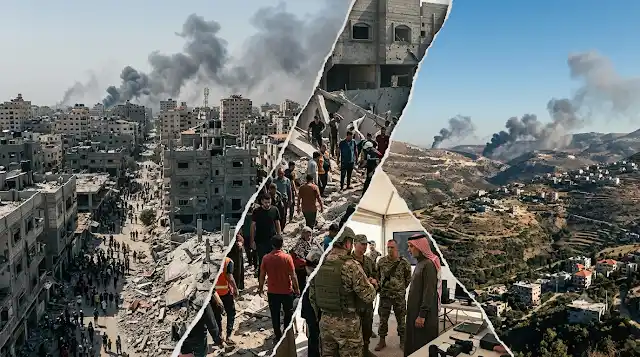
Middle East crisis has entered a dangerous phase where missile strikes have taken a backseat to financial strangulation, closed maritime corridors, and skyrocketing living costs.
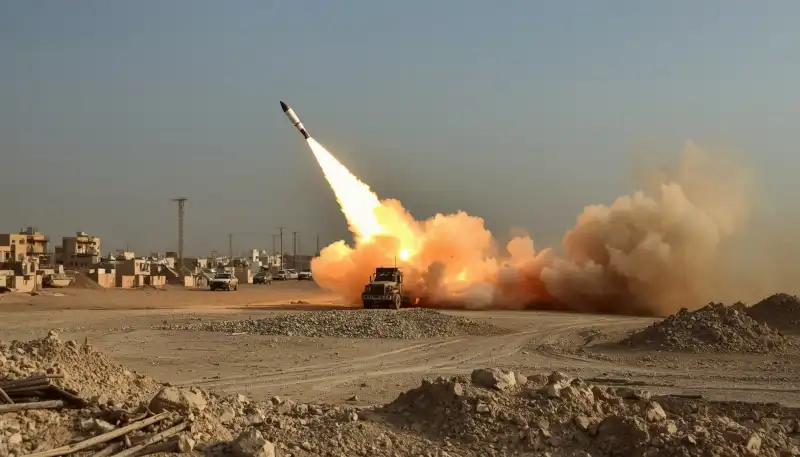
Reverse Engineering Fears Over U.S. Stealth Missiles: A report from Defence Security Asia pointed out that Iranian engineers might have gotten their hands on unexploded parts of American AGM-158 JASSM stealth cruise missiles used in recent strikes.
Honestly, that has set off massive alarm bells in Washington. When tech like that gets recovered, local technicians do not just stare at it—they strip down the stealth coating, check out the radar-absorbent materials, and pull apart the guidance chips. Even if they cannot build a carbon copy tomorrow, figuring out how the stealth skin works helps them tweak their radar setups to spot these missiles coming miles away.
The Strait of Hormuz Standoff: Donald Trump recently claimed the waters around Hormuz were completely swept of naval mines. But reports cited by Bloomberg and allied naval monitoring groups tell a totally different story, warning that maritime risks and active underwater mines are still very real hazards.
Look, Tehran is making sure everyone knows who controls that stretch of water:
- The Intercept: According to reporting from Al Jazeera citing Iran’s Fars News Agency, an Iranian warship recently confronted an Indian-flagged oil tanker called HAANA trying to slip through the southern Oman corridor, warning it off until the ship turned back around.
- Tankers Stranded: Meanwhile, The Economic Times, citing Agence France-Presse (AFP), reported that Sri Lankan authorities are keeping an eye on 11 sanctioned Iranian oil tankers stuck idling in international waters off their coast because they cannot get back into Gulf ports under the current blockade.
Washington Switches from Bombs to Sanctions. Diplomatic sources say the White House is changing tack. As detailed by Axios, U.S. Secretary of State Marco Rubio told allied diplomats that Washington is moving away from launching fresh kinetic strikes against Iran, choosing instead to lean heavily on financial sanctions.
Over in Tehran, military commanders have their own take on why this happened. According to Al Jazeera, citing Iran’s state news agency IRNA, IRGC Brigadier General Hossein Mohebbi claimed the Americans switched to economic measures simply because they burned through too many precision munitions during the opening weeks of the fight.
At the same time, talks are quietly happening behind closed doors. CBS News reported that Iranian Parliament Speaker Mohammad Bagher Ghalibaf defended these indirect discussions to domestic critics, stating plainly that talking does not mean Tehran is retreating or giving up its principles.
Regional Fallout: Qatar and Dubai Take a Heavy Hit. The wider Gulf is feeling the burn of this maritime gridlock:
- Qatar Gas Losses: As reported by OilPrice.com, citing Reuters and ICIS ship-tracking data, Qatar took a staggering $24 billion hit after its liquefied natural gas (LNG) exports crashed by 96% amid disruptions to transit routes through the Strait of Hormuz.
- Dubai Airport Slump: Figures verified by Reuters showed that passenger traffic through Dubai International Airport dropped by over 30% in the first half of the year as commercial airlines scrambled to divert around closed airspace.
Millions in Base Damage: According to an investigative report by NBC News, Iranian retaliatory attacks caused billions of dollars in structural and equipment damage to American intelligence sites and regional monitoring hubs. That has forced Pentagon planners to rethink where they keep their radar units and surveillance assets across the Middle East.
Anxiety Spills into Eastern Europe.e The ripple effects have even reached outside the region. Reporting from The Independent highlighted that villagers living in Bezmer, Bulgaria, grew anxious over U.S. Air Force KC-135 refuelling tankers stationed at the local air base, worrying their own village could end up caught in the crosshairs if the conflict keeps spreading.
Crushing Inflation Inside Iran: While the government talks tough, everyday families inside Iran are dealing with brutal domestic inflation. Official numbers covered by Al Jazeera show that essential groceries and medical supplies have gone through the roof over the past year:
- Cooking oil skyrocketed by 177%, eggs climbed by 129%, and oranges jumped by 106%.
- Fresh tomatoes rose by 71%, chicken by 74%, and paracetamol by 93%.
- Most alarming of all, the price of vital insulin surged by a massive 642%.
Frequently Asked Questions
Why is Washington shifting from airstrikes to sanctions? Diplomatic reports indicate the U.S. is prioritising financial blockades to choke revenue streams while preserving its precision weapon stockpiles.
Is shipping through the Strait of Hormuz safe right now? Allied intelligence reports show that sea mines and naval patrols continue to make commercial transit through the corridor risky.
What is the economic damage to Qatar and Dubai? Qatar has seen its seaborne LNG shipments fall by roughly 96%, while Dubai International Airport passenger traffic dropped by more than 30%.