Middle East war update Shock: Crude Tests $100 Peak

Anyone watching the Persian Gulf right now can see that the diplomatic masks have completely slipped off on 8 September 2026. Looking straight at this latest Middle East war update, what began as calibrated deterrence has spiralled into a punishing economic and military test of wills. Between direct naval missile salvos, oil prices testing triple digits, domestic fuel spikes draining Western households, and brutal frontline casualties across multiple borders, this showdown is reaching a dangerous tipping point.
Hormuz Tanker Warfare, Missile Debuts, and the $100 Oil Shock
Maritime transit corridors through the Gulf have turned into an active firing range, dragging global energy markets along for the ride:
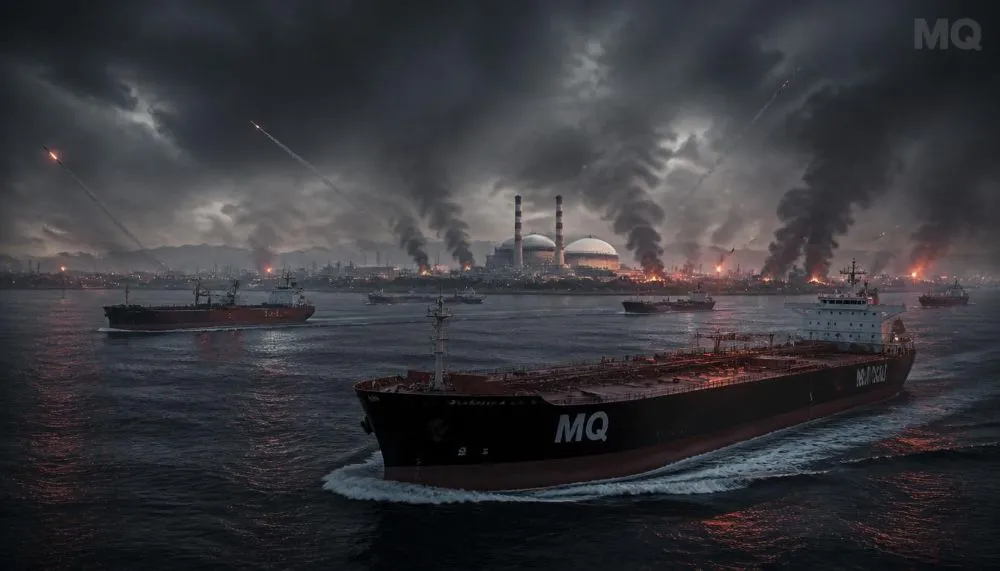
Global crude oil benchmarks jumped toward $100 per barrel after American naval strikes struck three Iranian commercial tankers navigating near the key export hub of Kharg Island (The Economic Times).Iranian naval units confirmed the combat debut of the Qasem Basir anti-ship ballistic missile, firing the system in an attempted strike against a forward-deployed American nuclear-powered aircraft carrier (Defence Security Asia).
Iranian Parliament Speaker Mohammad Bagher Ghalibaf issued an open public warning stating that sprawling American oil and gas production assets across regional waters are thoroughly exposed to retaliatory hits, warning that a “lost decade” awaits the American economy.Despite continuous US CENTCOM naval patrols intercepting commercial shipping, international maritime monitors recorded tanker passages through Hormuz dropping to historic lows as major shipping liners avoid the strait entirely.
Oman’s Royal Navy intervened to rescue 16 international crew members after an armed attack struck a commercial tanker operating near regional transit corridors (Al Jazeera). An emergency ministerial summit convened by the Arab League in Cairo issued a joint declaration demanding that maritime transit corridors must never be weaponised as political tools to enforce trade embargoes (Reuters).
Skyrocketing Fuel Costs, Pentagon Benefit Disputes, and Domestic Strain
The economic blowback from Gulf operations is hitting domestic populations on both sides with severe force:
Fresh consumer data confirmed that American households have spent an additional $100 billion on fuel over the past six months, averaging an extra $763 per family due to conflict-related supply disruptions (Al Jazeera).
National retail fuel monitoring revealed that American pump prices surged sharply, with regular petrol reaching $4.15 per gallon and diesel jumping to an eye-watering $5.90 per gallon (AAA). A domestic political storm broke out in Washington after the Pentagon initially withheld military death benefits from the widow of an American airman killed in regional combat operations, citing the absence of a formal congressional war declaration (India Today).
A tracking survey by the Financial Times showed Donald Trump’s presidential approval numbers sinking to an unprecedented 33% as public anger mounts over runaway domestic inflation and overseas military campaigns. Inside Iran, domestic fuel desks in major cities like Isfahan faced massive refuelling queues after authorities were forced to raise local petrol tariffs to manage domestic distribution shortfalls.
Lebanon Escalations, West Bank Demolitions, and Red Sea Clashes
Frontline hostilities across the Levant and the Arabian Peninsula are deteriorating at a rapid pace:
Israeli airstrikes across southern Lebanese districts killed 24 civilians and levelled local administrative and medical facilities, leaving several healthcare personnel in intensive care (CBS News). In Gaza, international relief agencies reported that total casualties since the outbreak of hostilities have climbed past 73,000, while fresh strikes killed an eight-year-old schoolchild alongside her father (Al Jazeera).
United Nations officials called for immediate international arms embargoes on Tel Aviv after documentation revealed that over 1,300 Palestinian civilians have been killed during recent operational truces (The Guardian). Israeli military units in the occupied West Bank announced demolition plans targeting five additional residential homes, alongside the fatal shooting of a young civilian man during street operations (Al Jazeera).
Across Yemen, heavy combat erupted as Houthi units downed two Saudi surveillance drones within 12 hours before launching retaliatory rocket strikes targeting an Aramco oil processing refinery in the Jizan sector.
Frequently Asked Questions
Why are crude oil prices approaching $100 per barrel?
Crude oil prices surged toward $100 after American naval strikes struck Iranian tankers near Kharg Island, raising severe fears of prolonged energy supply cut-offs in the Strait of Hormuz.
What is the Qasem Basir missile?
The Qasem Basir is a newly deployed Iranian anti-ship ballistic missile designed specifically to target and penetrate defensive shields around heavy naval surface combatants.
Why did US consumers spend an extra $100 billion on fuel?
Severe maritime shipping risks and crude market volatility caused by Gulf naval hostilities pushed American pump fuel and diesel prices to historic peaks.
Why was an American military widow denied standard benefits?
The Pentagon initially withheld full military death payouts because the US Congress has not passed a formal, constitutional declaration of war against Iran.
What did the Arab League state regarding maritime corridors?
At an emergency summit in Cairo, Arab League foreign ministers declared that international maritime waterways must not be weaponised to enforce unilateral military or economic blockades.