Nuclear Risk US Iran Military Crisis Oil
- The Ultimate Middle East Structural Break. Why Washington Military Drive Is Pushing The World To A Catastrophic Nuclear Crisis
- Deep Analysis Of Defensive Movements And Tactical Failures Across The Theater
- The Mainland Invasion Strategy And The Secret Diplomatic Grid
- The Global Energy Choke Point Under Absolute Siege
- The Looming Bushehr Nuclear Contamination Disaster
The Ultimate Middle East Structural Break. Why Washington Military Drive Is Pushing The World To A Catastrophic Nuclear Crisis
The tactical architecture in the Middle East has not just fractured; it has undergone a total and irreversible structural breakdown. What the global community is witnessing right now is not a series of isolated proxy skirmishes or temporary border disputes. Instead, the entire region has been forced into an unrestricted kinetic phase where all previous rules of engagement, those invisible diplomatic lines that once protected mainland sovereign territory and critical economic infrastructure, have been completely thrown out the window. The primary driver behind this sudden and violent escalation is a massive, ego-driven military push from Washington, heavily tied to regional alignment strategies involving Israel. In their relentless pursuit to establish total geopolitical dominance and act as the absolute boss of the Middle East, Western planners are actively driving the global economy toward a severe crash and exposing humanity to an unprecedented environmental disaster.
Deep Analysis Of Defensive Movements And Tactical Failures Across The Theater
To properly understand how deep this crisis goes, we have to look directly at the raw combat data and the structural failures tearing through Western defense networks. For months, corporate media channels have tried to downplay the tactical risks, but the live telemetry tells a completely different story. The resistance forces have effectively bypassed sophisticated Western defense grids, proving that the previous American deterrence strategy is completely dead.
The most devastating tactical hit occurred with the direct penetration of Port Shoaib in Kuwait. A precision drone strike successfully breached the facility, killing six US troops on the ground. The most damning detail emerging from this specific incident is that field operatives and radar units had repeatedly flagged actionable early warnings about incoming low-signature threats. However, the rigid military command hierarchies in Washington completely ignored these live reports until the impact occurred. This represents a massive systemic failure in Western intelligence sharing and operational readiness.
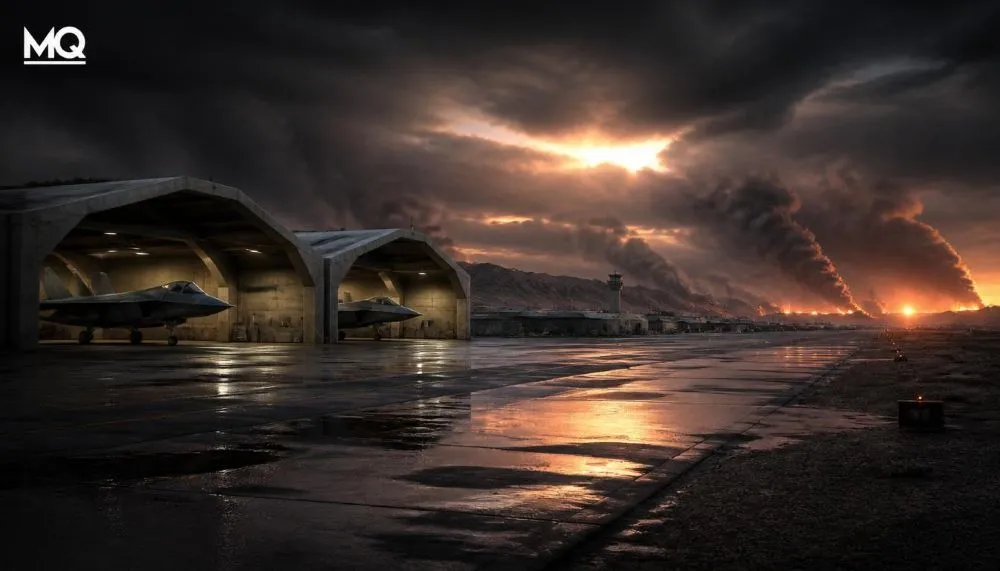
Simultaneously, the theater has seen coordinated deep-theatre sabotage that has fundamentally crippled Western logistics. Precision strikes recently targeted Jordan’s Prince Hassan Air Base, setting primary fuel depots and critical missile storage infrastructure completely ablaze. By neutralizing the fuel and ammunition reserves at a primary hub like Prince Hassan Air Base, regional defense forces have effectively choked the logistical supply lines that Western commands rely on to sustain long-range operations. This shows an incredibly high level of tactical planning, proving that the anti-Western coalition can accurately identify and destroy high-value assets deep within theoretically secure zones.
The Mainland Invasion Strategy And The Secret Diplomatic Grid
Instead of taking a step back to re-evaluate these massive logistical losses, Washington has chosen to double down on its aggressive posture. Western airstrikes have officially crossed the ultimate red line by striking directly inside mainland territory. Heavy bombardments have targeted localized utility grids, including a critical water pumping station in southwestern Iran. This strike on a basic civilian utility infrastructure resulted in immediate casualties and injuries, signaling a dangerous shift toward total infrastructure warfare.
Military and defense analysts are now raising major alarms over the true strategic intent behind these aggressive maneuvers. A wave of over one hundred and forty strikes is not just a retaliatory measure; it is an explicit tactical operation designed to completely clear the path for a potential full-scale ground invasion. The systematic targeting of southern radar sectors, coastal utility lines, and air defense batteries points to a textbook pre-invasion campaign. Prominent security experts confirm that Washington is trying to physically position its forces to dictate absolute terms, acting as the unilateral authority over the region.
This sudden military rush makes perfect sense when you analyze the hidden diplomatic timeline that was running in the background. Highly credible intelligence reports from the Times of Israel have revealed that before this violent outbreak, high-ranking US political figures, backed directly by Donald Trump, were actively managing a massive, aggressive push to secure a historic normalization agreement between Israel and Saudi Arabia. This secret diplomatic initiative was designed to permanently alter the political balance of the Middle East, locking out competing regional powers. When the sudden escalation shattered this fragile diplomatic plan, Washington reacted with raw military fury. They are now using overwhelming kinetic force to salvage their strategic goals, trying to force compliance through absolute destruction because their political maneuvers failed.
The Global Energy Choke Point Under Absolute Siege
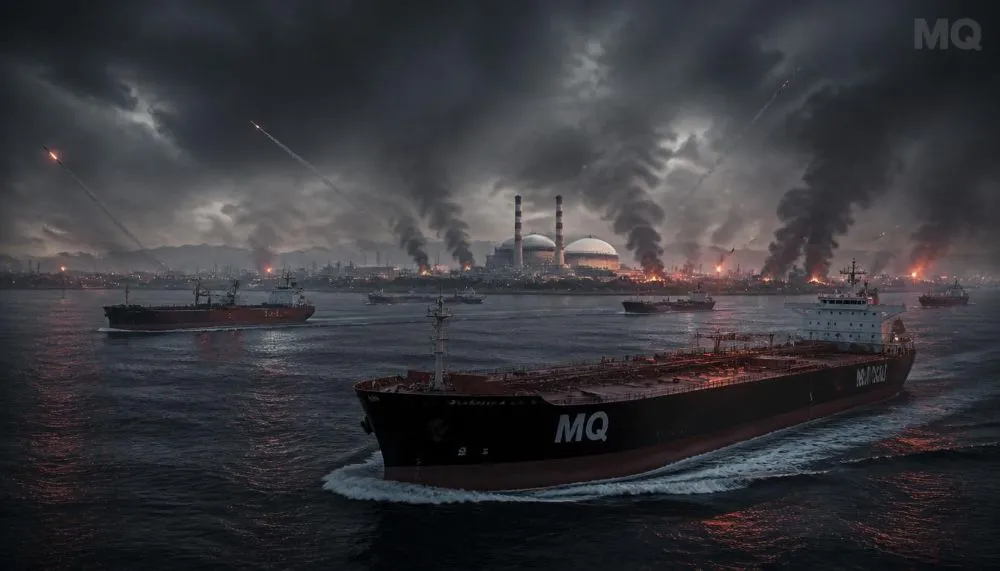
The immediate fallout of this reckless military drive has extended far beyond the immediate battlefield, sending massive shockwaves through the global commodity markets. Following the waves of Western strikes and the subsequent regional counter-attacks, international crude benchmarks immediately surged past three point five percent. This rapid price spike is a direct, panicked reaction from global trading boards to the very real and immediate threat of a total closure of the Strait of Hormuz.
The economic reality here is terrifying. The economies of the countries in this region, and indeed the entire global market, are completely reliant on the unhindered flow of oil and gas exports through this narrow maritime corridor. Over twenty percent of the global energy supply passes directly through the Strait of Hormuz. With both sides now operating in an unrestricted kinetic phase, this vital global artery is effectively blocked.
Commercial shipping syndicates and multi-billion-dollar logistics companies are not going to risk their vessels, cargo, and crews just to project a false sense of stability for Western politicians. When loitering drone signatures and anti-ship missile active radars are printed live on commercial bridge displays, the shorter, traditional routes become completely unusable. Fleets are already cutting ties with the region entirely, making the drastic and expensive decision to redirect all maritime traffic around the Cape of Good Hope. This massive detour adds weeks to global transit timelines, skyrocketing freight costs, and guaranteeing a massive wave of global inflation that will hit everyday consumers from Europe to Asia. Even neutral mediating states like Qatar and Oman, which have spent years trying to broker backchannel communication lines between Washington and regional actors, are now finding their own national interests and economies heavily targeted and disrupted by this spreading chaos.
The Looming Bushehr Nuclear Contamination Disaster
While the threat of global economic ruin is severe, the most terrifying consequence of this unchecked aggression is the impending nuclear environmental disaster that the West is actively courting. Amidst the ongoing waves of airstrikes targeting mainland infrastructure, Russia has officially started preparing and executing evacuation protocols for its state nuclear employees and specialized engineers from Iran’s Bushehr nuclear power plant. Rosatom, the Russian state nuclear corporation, had to make this critical operational call as the combat perimeter moved dangerously close to the nuclear facility.
The presence of heavy missile systems, precision bombs, and retaliatory drone swarms in the direct vicinity of an active nuclear power plant is an act of absolute madness. Rosatom and international nuclear safety regulators have issued strict warnings stating that any collateral hit, any stray missile, or any deliberate strike on the Bushehr infrastructure carries an extreme risk of causing a catastrophic structural failure. Such an impact would inevitably lead to a massive radioactive leak, releasing deadly nuclear contamination into the atmosphere and the surrounding waters of the Persian Gulf.
A radiation leak at Bushehr would not be contained within national borders. The prevailing wind patterns and maritime currents would rapidly spread radioactive fallout across multiple neighbouring nations, permanently poisoning vital water desalination plants, destroying marine ecosystems, and rendering critical global shipping lanes completely uninhabitable for generations. Yet, because the leadership in Washington is entirely focused on a pride-driven military victory and satisfying a massive geopolitical ego, they are willingly playing Russian roulette with a nuclear facility. They would rather risk an environmental apocalypse than blink first or admit that their aggressive strategy has failed.
The Pride Game That Is Holding Humanity Hostage
When you strip away all the complex military terminology and corporate media spin, this entire crisis boils down to a pure, destructive clash of pride. Donald Trump has made his intentions completely transparent; he wants to look like the absolute winner. The global stage. His administration is pushing an aggressive finish-the-job narrative, demanding total, unconditional submission from regional powers to show the world that Washington can force anyone to bend to its rules. They do not care about the catastrophic risk of inflation, they do not care about the collapse of international shipping, and they are completely indifferent to the threat of nuclear radiation poisoning millions of innocent people.
On the other side, regional actors are refusing to accept this forced subjugation, recognizing that giving up their strategic leverage over the energy corridors means total political elimination. Because Washington has substituted real diplomacy with raw, arrogant coercion, the threshold for a peaceful resolution has been entirely passed. The global community is now trapped in a terrifying spiral where a massive, irreversible global catastrophe is being treated as acceptable collateral damage, all so a few political figures in the West do not have to suffer a blow to their strategic egos.
Frequently Asked Questions
Why is the current military situation in the Middle East being called a total structural break
The conflict has entered an unrestricted kinetic phase where all the old diplomatic boundaries have completely collapsed. In previous escalations, both sides followed unwritten rules that kept mainland sovereign territories and critical civilian infrastructure out of the target line. Now, with Western airstrikes hitting directly inside mainland Iran and regional forces destroying major US assets in Kuwait, those boundaries are gone. It is a completely unchecked escalation where infrastructure and logistics are being targeted openly.
What caused the high casualties at the US facility in Kuwait
The devastating drone strike at Port Shoaib, which killed six US troops, was the result of a massive systemic failure in military command hierarchies. Reports from the ground show that localized radar units and field intelligence operatives had repeatedly flagged actionable early warnings about low-signature drone threats heading toward the facility. However, these live warnings were ignored by higher commands in Washington until the impact occurred, exposing a major blunder in Western operational readiness.
How are the airstrikes in southwestern Iran linked to a potential ground invasion?
According to available reports, Western forces have carried out over 140 strikes, some of which have targeted localized utility infrastructure, including a primary water-pumping station in southwestern Iran. Security and defense analysts warn that this volume of concentrated strikes is not just a standard retaliatory measure. It follows a textbook pre-invasion campaign strategy designed to systematically clear out local defense grids, disrupt civilian infrastructure, and position Western forces to act as the sole boss of the region.
Why is the Strait of Hormuz conflict causing global economic panic
The economies of the entire region and major global markets are completely dependent on the oil and gas exports that flow through this narrow maritime corridor. Over twenty percent of the global energy supply passes directly through the Strait of Hormuz. Because of the unrestricted fighting, international crude benchmarks immediately surged past three point five percent. Commercial shipping syndicates are refusing to risk their multi-billion-dollar fleets with active drone threats printing on their radars, forcing shipping lines to redirect all traffic around the Cape of Good Hope, which sparks massive global inflation.
What is the nuclear radiation risk at the Bushehr power plant?
The extreme proximity of Western airstrikes to Iran’s Bushehr nuclear power plant has forced Russia’s state nuclear corporation Rosatom to start preparing evacuation protocols for its specialized employees. Rosatom has issued strict warnings that any stray missile, collateral impact, or deliberate strike on this active facility carries an extreme risk of causing a catastrophic structural failure. This would trigger a massive radioactive leak, permanently contaminating the Persian Gulf, destroying marine ecosystems, and poisoning vital water desalination plants across multiple neighbouring countries.
What was the secret diplomatic agreement running in the background?
Before the violent outbreak shattered regional stability, high-ranking US political figures backed directly by Donald Trump were actively managing a massive push to secure a historic normalization agreement between Israel and Saudi Arabia. This secret diplomatic initiative was designed to permanently alter the political balance of the Middle East to favour Western alliances. When the military escalation destroyed this fragile political plan, Washington shifted to overwhelming kinetic force to satisfy its strategic ego and force submission through absolute destruction.