US-Iran conflict effects on Europe
- The Gulf Escalation: Drones, Grounded Flights, and the Energy Trap Facing the West
- The Chaos of Wave 9 and the Drone Threat
- Blasts Rocking the Coast of Qeshm Island
- Massive Confusion Inside Tehran’s Leadership
- Pakistan Sounds the Alarm Bells
- Holding the Red Sea Hostage
- European Airlines Teetering on the Brink
The Gulf Escalation: Drones, Grounded Flights, and the Energy Trap Facing the West
After following these developments closely each day, it’s clear the situation is growing more concerning. When the initial friction started to pick up in the Middle East, plenty of folks over here in the UK and across Europe probably didn’t think twice about it. To most people, it appeared to be another regional dispute, unlikely to have any direct impact on their everyday lives. But everything has completely flipped over the last couple of days. Right now, we are staring down a massive, messy chain reaction where the global US-Iran conflict effects are actively disrupting flights at local airports, keeping European business owners awake at night, and threatening to make the weekly supermarket run a lot more expensive.
Forget about politicians just trading insults on the evening news. Things have gone way past that point now. We are talking about heavy, direct military strikes on the ground, and the knock-on effects are spreading way faster than anyone expected. Let’s just go through the newest updates and see what is actually happening out there right now.
The Chaos of Wave 9 and the Drone Threat
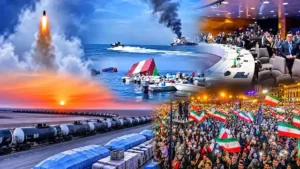
The whole military situation in the area just took a massive turn for the worse after the launch of what reports are calling “Wave 9 of Operation Nasr 2“. Media slides put out by Al Mayadeen English show that Iranian forces have basically turned up the heat, throwing a massive wave of retaliatory strikes into the mix following recent American movements.
This wasn’t some tiny, quiet skirmish out in the middle of nowhere. The reports clearly show that these strikes targeted incredibly high-value logistics bases and defensive networks right across the Gulf. There are direct reports of hits on a satellite communications centre, major early-warning radar arrays, and even a US military pier over at the Ali Al Salem Air Base. To make the whole map even messier, they also went after Shuaiba Port inside Kuwait. By striking these spots in nearby countries, the fighting is forcing local governments into an absolute corner, forcing them to pick a side, whether they like it or not.
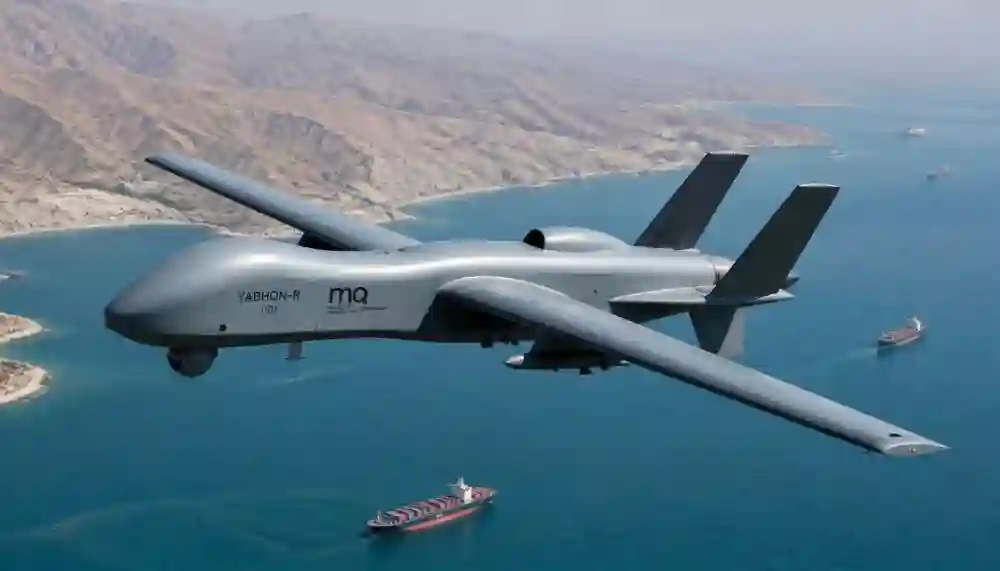
The specific tech being used to run this operation is what is really catching people’s attention. Intelligence files point to a heavy reliance on a massive drone type called the Yabhon-R. It is a huge, long-flying unmanned plane built by an outfit called Adcom Systems, designed to just sit at a medium altitude for hours on end. Its main job is simple: keep its cameras rolling for long-term scouting and live surveillance. Having these giant digital eyes permanently parked in the sky means neither side can move fuel trucks, gear, or soldiers without the other team spotting it immediately. It completely takes away the element of surprise and makes the whole standoff way more intense.
Blasts Rocking the Coast of Qeshm Island
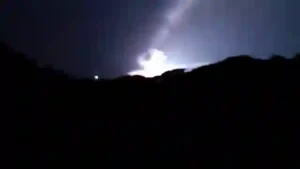
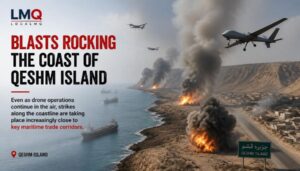
Even as drone operations continue in the air, strikes along the coastline are taking place increasingly close to key maritime trade corridors. Local news channels in Iran just dropped some heavy updates, confirming that a whole load of US missiles smashed right into the ground around Qeshm Island.
If you pull up a map, you’ll see this island sits right at the narrow neck of the Persian Gulf. It basically acts as the main security gate for every single vessel trying to move in and out of the region. By dropping heavy strikes so close to the island, the Western military looks like it’s trying to completely blind Iran’s coastal radar outposts and missile launch pads. The big issue is that every single explosion near these specific waters sends a massive panic through global businesses. It drags the actual fighting right to the doorstep of the world’s most vulnerable commercial shipping paths.
Massive Confusion Inside Tehran’s Leadership
Even amid the ongoing bombardment, Iran’s political messaging has appeared disorganized, with conflicting signals emerging from different officials. A major headline from Dawn recently shed light on a pretty deep argument unfolding within the top ranks of the Iranian military itself.
On one side of the coin, you have a formal military spokesperson telling the public that Iran has zero plans to start a fight with its neighbours. They are doing everything they can to quiet down countries like Saudi Arabia, the UAE, and Kuwait, claiming this is strictly a defensive battle against Western forces. But that calm message completely crashes into a super aggressive warning dropped by a separate army general just a few days before. That specific general openly swore to destroy the entire infrastructure of the region if the United States dared to hit any civilian areas inside Iran. This massive back-and-forth proves that the commanders pulling the strings are properly stressed and fighting among themselves behind closed doors.
Pakistan Sounds the Alarm Bells
With the fire getting bigger by the hour, neighbouring nations are getting incredibly scared that the chaos is going to spill right over their own borders. Pakistan has officially stepped in to deliver a blunt, no-nonsense warning to both Washington and Tehran.
The Pakistani Foreign Ministry put out a direct statement telling both sides to immediately stop the copycat missile strikes and get back to basic technical-level talks. Speaking straight to reporters, they made it clear that a giant crisis like this cannot be solved with bombs. They are begging for maximum diplomatic restraint because they know that if this blows up into a full-scale regional war, the economic collapse will completely break the stability of the entire South Asian and Middle Eastern borders overnight.
Holding the Red Sea Hostage
Just when it felt like the shipping crisis couldn’t possibly get any worse, the focus of the war suddenly jumped from the Persian Gulf straight over to the Red Sea. A massive breaking report from Reuters revealed that Iran has reportedly ordered Houthi movements to get completely ready to shut down the main Red Sea transit gate.
According to people on the inside, this extreme fallback plan will be triggered the exact second the United States follows through on threats to strike Iran’s domestic electricity and energy grid. Why does this matter so much if you are living in places like London or Paris? It all comes down to how everyday stuff actually reaches our shops. Everything is linked back to these narrow shipping lanes, and if people in charge don’t start using their heads soon, these global knock-on effects are going to bite every single one of us where it hurts. Trying to block both the Strait of Hormuz and the Red Sea simultaneously is essentially putting a chokehold on the global economy.
European Airlines Teetering on the Brink
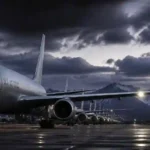
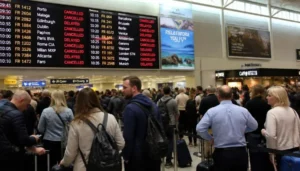
You might think that a massive war over shipping lines in the desert is a million miles away from normal life in London, Paris, or Berlin. But the economic shockwaves are already slamming into local airports. A brutal report by Press TV highlighted that this ongoing conflict is pushing several smaller European airlines straight toward total bankruptcy.
Major low-cost carriers, including easyJet, are dealing with huge financial pain because of the sudden, crazy spike in global jet fuel prices. Because planes are being forced to fly massive, roundabout routes to completely stay clear of the active war zones and missile paths in Middle Eastern airspace, they are burning through millions of gallons of extra fuel. For regional airlines that operate on tiny profits, these massive operating costs are completely impossible to handle. If this fighting doesn’t stop soon, it is going to cause massive holiday cancellations, crazy ticket price hikes, and corporate collapses right across the Western travel industry.
The Plain Truth
Let’s be completely real about where this leaves us. We’re facing a crisis in which ports are being targeted, drones are disrupting the skies, and critical global energy routes are under growing threat. The moment a military conflict shifts from the battlefield to changing the price of a local flight or a weekly food shop in Europe, it stops being a distant political story. The whole world is tied to these tiny choke points, and if common sense doesn’t prevail soon, the global US-Iran conflict effects are going to hit every single one of us right at home.
Frequently Asked Questions (FAQs)
Q1. How do these regional clashes actually affect regular people in the UK and Europe?
Ans: Look, it comes straight down to your wallet. This whole mess instantly pumps up the price of oil and jet fuel globally. The result is pricier holiday flights, higher shipping costs for everyday products, and rising energy bills that hit households directly.
Q2. What exactly kicked off Wave 9 of Operation Nasr 2?
Ans: Look, it is the latest round of heavy retaliatory strikes launched by Iranian forces. They completely turned up the heat by targeting US radar systems, communication hubs, and military piers right across Kuwait and the wider Gulf region.
Q3. What’s the deal with the Yabhon-R drone everyone keeps mentioning?
Ans: Honestly, it’s just a massive, long-range unmanned plane put together by Adcom Systems. It can park itself in the sky for hours, giving military commanders a live feed of everything moving below, so no one can sneak any gear around.
Q4. Why are American forces striking targets right next to Qeshm Island?
Ans: Because it’s a massive geographic bottleneck at the mouth of the Gulf. The US military is hitting that spot to completely wipe out Iran’s radar stations and coastal missile launchers.
Q5. Why is this crisis pushing low-cost airlines like easyJet toward total collapse?
Ans: It’s the crazy price of jet fuel right now. Budget lines like easyJet are forced to take massive, massive detours to completely bypass the active missile zones, which burns through an insane amount of cash every day.