Iran War: US Navy Budget & Hormuz Crisis
Six months of confrontation between Washington and Tehran have created severe military, financial, and logistical bottlenecks, making this latest Iran war update critical to follow. From depleted naval operational budgets and covert intelligence warnings in Moscow to commercial shipping gridlocks across the Strait of Hormuz, both sides find themselves locked in an escalating economic and asymmetric war of attrition.
US Navy Budget Drain and Capitol Hill Assessment on Six-Month War Goals
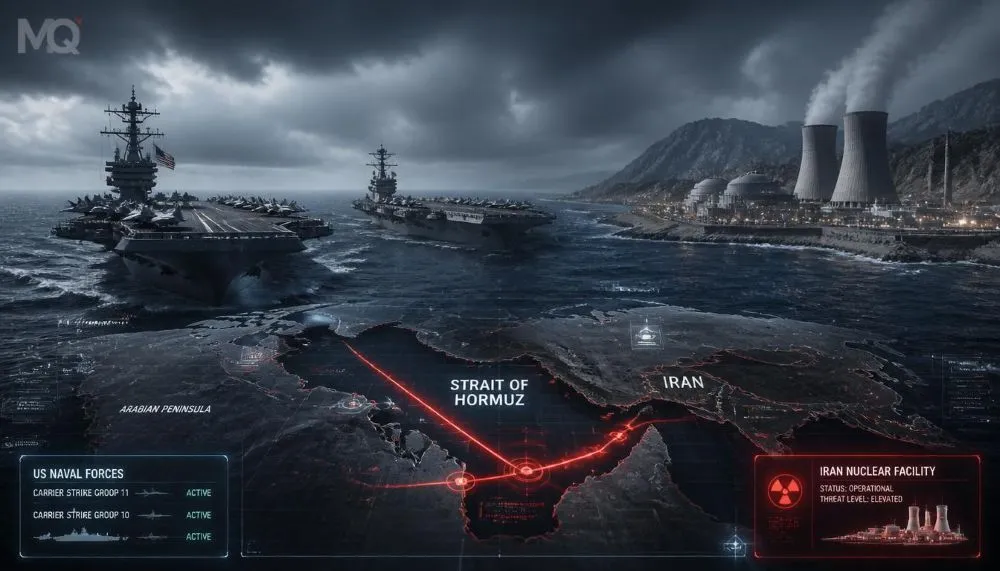
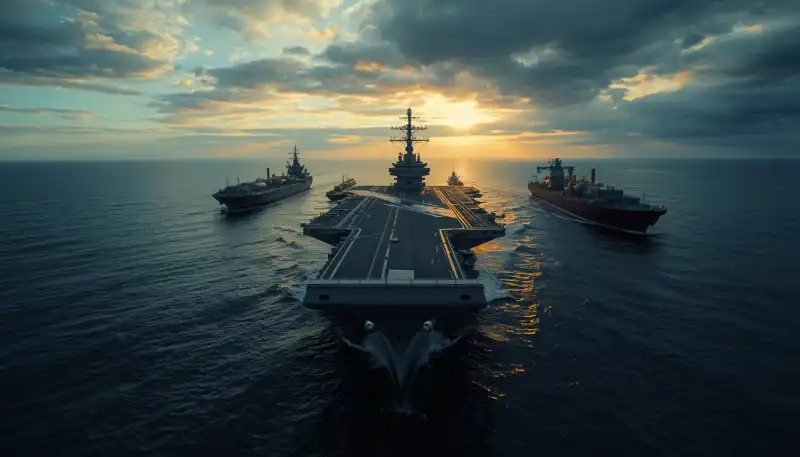
The prolonged maritime standoff in the Middle East is putting serious strain on American naval readiness. An investigation by The Guardian revealed that six months of non-stop aircraft carrier deployments and interceptor operations have drained the US Navy’s operational budget. Pentagon memos and interviews with former defence officials show that maintenance accounts are running low, leaving the military facing heavy funding challenges for an open-ended naval posture with no clear endgame.
Lawmakers on Capitol Hill are openly questioning what this military campaign has actually delivered:
- Senator Jack Reed, the senior Democrat on the Senate Armed Services Committee, released a critical assessment of the six-month milestone, stating that “not a single objective has been achieved” in taking down Tehran’s missile arsenal and regional proxy networks, according to CBS News.
- Over in Israel, Ynet Global reported that Washington told regional mediators it will not go back to the terms agreed in the June Memorandum of Understanding (MoU), choosing instead to keep up the economic squeeze until Iran accepts new demands.
- When CIA Director John Ratcliffe popped up in Moscow unannounced, NBC News reported he sat down with Russian Foreign Intelligence Service head Sergey Naryshkin specifically to tell Moscow to stop sharing satellite imagery and intelligence coordinates with Tehran.
Strait of Hormuz Shipping Crisis, De-Mining Operations, and Diplomatic Splits
Commercial shipping across the Persian Gulf remains in a messy gridlock:
- Field reports from United News of India (UNI) confirmed the International Maritime Organization (IMO) tracked more than 70 attacks on international vessels, leaving thousands of sailors stranded on roughly 400 commercial ships waiting on green lights.
- Over 200 naval mines and floating hazards have already been cleared out of primary transit routes by international naval teams trying to keep lanes open, according to Al Arabiya English.
- The Sultanate of Oman formally walked away from escorting tankers alongside American warships in Hormuz, preferring direct bilateral talks with Tehran. This follows earlier regional maritime talks and US Operation Economic Outcast Sanctions, showing how local Gulf partners are shifting their strategy.
- Iranian state agency Nournews, cited by Al Mayadeen, warned that Tehran will retaliate against proposed Western legislation designed to seize Iranian oil tankers using old maritime “Prize Court” rules.
Secondary Sanctions, Cyber Bounties, and Chinese Energy Imports
The economic fight between the US Treasury and regional powers is spilling out across global energy routes and cyber networks:
- An investigation by The New York Times, cited by Al Mayadeen, confirmed that Chinese independent refiners are still importing around 1.2 million barrels of Iranian crude oil every day despite new US Treasury designations.
- The US State Department rolled out bounties of up to $10 million for details on two Iranian hackers, Fatemeh Sedighian Kashi and Mohammad Bagher Shirinkar, tied to the Shahid Shushtari group under the IRGC Cyber-Electronic Command for attacks on Western infrastructure.
- Iranian Parliament Speaker Mohammad Bagher Ghalibaf pushed back against US Treasury Secretary Scott Bessent on social media, telling Washington to handle its own spiralling national debt before funding bases abroad.
- Official statements carried by Al Mayadeen showed Tehran insisting its domestic industrial output is holding steady under the blockade, while calling for internal unity.
Frequently Asked Questions
How has the conflict impacted the US Navy’s budget?
Investigations by The Guardian show that half a year of constant carrier deployments and missile interceptions has burned through vital fleet maintenance and operational funds.
What did the International Maritime Organization report on Hormuz?
United News of India confirmed that the IMO verified over 70 attacks, stranding 400 cargo vessels and thousands of mariners across regional waters.
Why did the CIA Director warn Russian intelligence about Iran?
According to NBC News, John Ratcliffe pressed Russian intelligence chief Sergey Naryshkin to stop feeding satellite targeting data and intelligence to Tehran.
Is China still buying oil from Iran despite US sanctions?
Yes. The New York Times reported that Chinese refiners continue to import roughly 1.2 million barrels of Iranian crude oil every day.
Who are the cyber operatives named in the US reward notices?
The US offered up to $10 million for information on Fatemeh Sedighian Kashi and Mohammad Bagher Shirinkar over cyber operations linked to the IRGC.