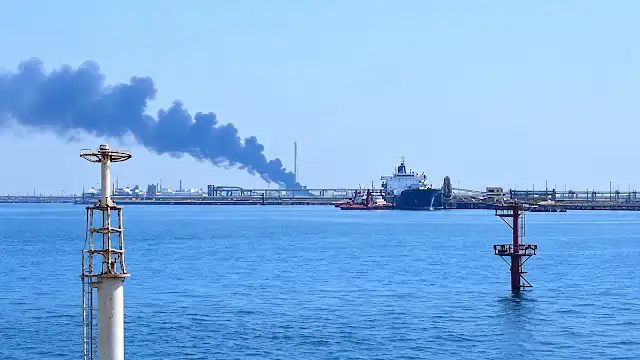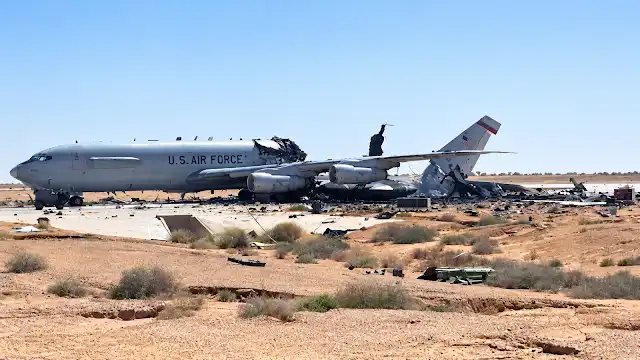
Persian Gulf waters witnessed another very difficult morning this Wednesday, 16 September 2026. The wider Middle East crisis escalated again after armed boats clashed near the choke point just as global oil benchmarks took a beating. Western shipping hubs are running out of easy workarounds, and fresh casualty papers from Washington reveal the heavy hardware toll taken by weeks of friction.
Pentagon Equipment Assessments and Gulf Air Defences
Military accounting and regional interception reports highlighted substantial attrition across contested Gulf airspace:
A legislative evaluation document from the Congressional Research Service detailed extensive equipment strain from regional engagements, citing combat losses and maintenance write-offs involving four F-15E strike fighters, an F-35A damaged by ground fire, and multiple KC-135 aerial refuelling airframes (Congressional Research Service).
Iranian Foreign Minister Seyed Abbas Araghchi cited the legislative accounting records publicly, stating that regional defence resilience had forced external forces to acknowledge the operational toll inflicted across regional military installations (Press TV).
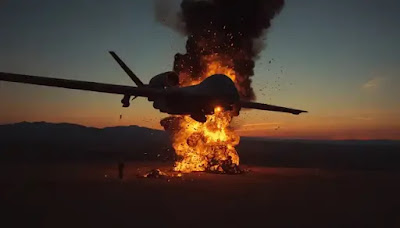
Iranian air defence batteries shot down a third American MQ-1 reconnaissance drone operating above the Strait of Hormuz, according to defence statements released in Tehran (Al Mayadeen).
United States naval units engaged and destroyed two armed Iranian patrol vessels after the fast-attack craft reportedly attempted to intercept an unmanned maritime surveillance vessel (Anadolu Agency).
Senior Iranian Expediency Council member Mohsen Rezaee dismissed recent diplomatic remarks from Washington, declaring on public channels that Tehran will not enter bilateral negotiations until established regional conditions are fully met (Al Jazeera).
Civil aviation authorities in Mashhad confirmed an emergency landing for a crowded domestic passenger jet bound for Kermanshah following sudden navigational and engine disruptions (Press TV).
Strategic Fuel Depletion and Maritime Routing Alternatives
Mounting logistical bottlenecks across the Strait of Hormuz sent tremors through international oil markets and Western strategic reserves:
Global oil executives warned that severe commercial fuel shortages have arrived, pointing out that commercial petroleum stocks are depleting rapidly while regional export corridors face structural limits (The Wall Street Journal).
Stockpile tracking by the U.S. Energy Information Administration showed strategic petroleum reserves sliding down to counts unseen since the early 1980s, largely drained by continuous emergency market tapping (U.S. Energy Information Administration).
During consultations with continental manufacturers, French President Emmanuel Macron insisted that Europe must help lay down alternate pipeline routes that sidestep Hormuz altogether to shield consumers from trade chokepoints (Anadolu Agency).
Turkish foreign ministry envoys addressed regional friction, arguing that wider Middle Eastern economic stability relies on maintaining reliable commercial corridors and respecting sovereign security frameworks (Anadolu Agency).
Commercial hauliers across the northern Levant adapted to shipping barriers by moving containerised crude and diesel consignments overland via Syrian transit highways toward regional distribution terminals (Reuters).
Energy traders in London reported that international benchmark crude traded firmly above $104 per barrel as tanker passage volumes through Hormuz dropped to fractional levels (Financial Times).
Diplomatic Maneuvers and Intelligence Directives
Away from the water, embassies and cyber watchdogs were busy responding to parallel risks:
A joint security alert went out from British, American, and Dutch agencies, telling infrastructure operators to guard their systems against aggressive state-backed spyware (The Times of Israel).
Israeli envoys have quietly floated diplomatic ideas with Kuwait, hoping to explore potential membership in the Abraham Accords within the next half year (i24 News).
Authorities in Tehran launched a reporting website where citizens can log details about expatriates suspected of passing information to foreign security units (Press TV).
Diplomatic teams gathered in Berlin to work through transit rules that could keep vital trade straits navigable despite regional wars (Deutsche Welle).
Regional freight federations confirmed that bulk transport fees across the Persian Gulf have doubled within a single working week, forcing smaller commercial charter firms to anchor their fleets off regional ports until convoy protections get formalised (Lloyd’s List).
Questions and Answers
What hardware damage was acknowledged in the legislative records?
The accounting documented four lost F-15E jets, an F-35A damaged by ground fire, multiple damaged KC-135 fuel carriers, and thirty MQ-9 drone write-offs.
Why did France push for trade bypasses around Hormuz?
President Macron urged allies to back overland routes because ongoing maritime blockades leave European factories dangerously exposed to fuel shocks.
How low have American emergency fuel stocks dropped?
EIA figures confirm the strategic stockpile has drained to levels not seen in 44 years due to frequent releases intended to suppress consumer fuel inflation.
What was Mohsen Rezaee’s reaction to proposed talks with Washington?
He set aside diplomatic talks coming from Washington, repeating that direct negotiations cannot begin while Iran’s key terms remain completely untouched.
What did the trilateral cyber notice warn businesses about?
Agencies across the UK, Netherlands, and US asked core utilities to check their software networks for advanced foreign spyware targeting operational lines.
Is Kuwait set to join the regional accords soon?
While Israeli delegates suggested progress could surface over the next half year, Kuwait’s administration holds firm to common Arab peace terms.