US Eyes Iran Nuclear Sites as War Enters Messy New Phase
- The War Entering a Terrifying New Phase: US Eyeing Iran’s Secret Nuclear Sites and the Looming Regional Collapse
- The Logistical Setup: US Refuelling Aircraft Flooding Into Israel
- Target Pickaxe Mountain: The Plan to Strike Iran’s Deep Nuclear Sites
- Behind Closed Doors: The Messy Friction Between Trump and Netanyahu
- Fact Check: The Clashes at al-Tanf Garrison and the Propaganda War
The War Entering a Terrifying New Phase: US Eyeing Iran’s Secret Nuclear Sites and the Looming Regional Collapse
Honestly, tracking this entire Middle East crisis day after day is becoming genuinely worrying. When the initial friction picked up a few weeks back, a lot of folks back home in the UK probably didn’t think much of it. Most people just assumed it was another distant geopolitical dispute that wouldn’t affect their day-to-day lives. But the whole situation has completely flipped over the last few days, and these massive US-Iran conflict effects are starting to hit regular civilian supply lines, global markets, and international flight paths.
Let us just clear the noise and look at what the latest international reports and battlefield updates are actually showing right now. Developments are accelerating at such a pace that, although many assume peace talks are still on the table, military momentum is pushing toward a critical juncture. of no return.
The Logistical Setup: US Refuelling Aircraft Flooding Into Israel
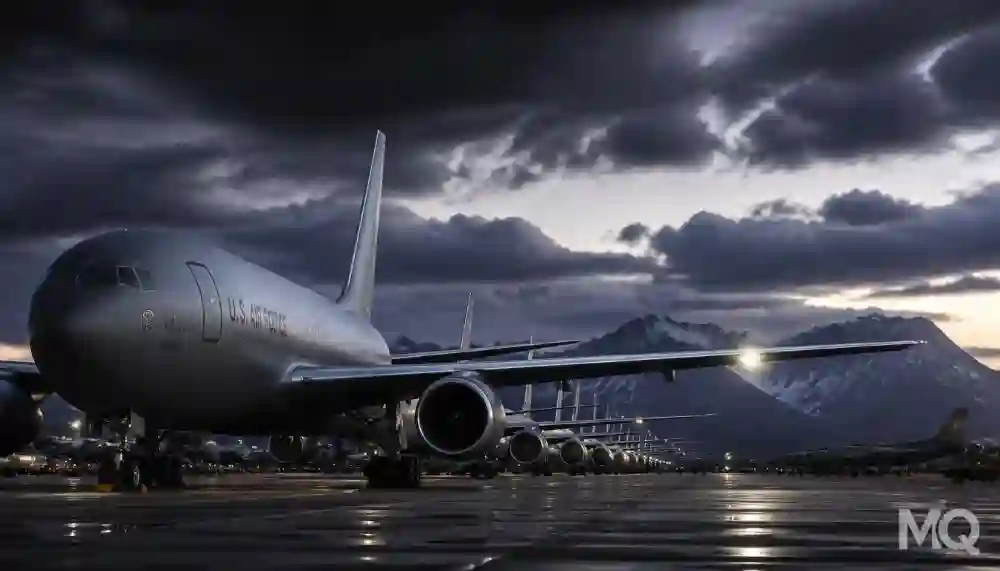
If you want to understand where a war is heading, you don’t look at what politicians say in front of the cameras; you look at where the fuel is moving. The Trump administration has officially notified Israel that it is deploying dozens of additional military refuelling aircraft, like the Boeing KC-46A, straight to Ben Gurion Airport.
What makes this move even more alarming is where these planes are coming from. Washington has actively started draining these massive tankers out of their long-standing strategic bases across various Arab countries and redirecting them straight to Israel. For anyone tracking military logistics, these flying fuel stations are designed for one specific purpose: to top up fighter jets mid-air during long-range operations. This is the final logistical setup for a massive, long-range aerial bombing campaign against heavily fortified targets.
Target Pickaxe Mountain: The Plan to Strike Iran’s Deep Nuclear Sites
The core focus of this planned military expansion isn’t just standard border skirmishes or hitting proxy camps. The US is reportedly planning devastating strikes on Iran’s highly secure nuclear infrastructure. The strategy focuses on using heavy bunker-busting strikes to collapse deeply buried facilities, potentially trapping enriched uranium underground and setting back the nuclear programme.
International intelligence leaks show that the US is specifically eyeing heavy operations against secret military facilities buried deep inside the valleys of Pickaxe Mountain. Hidden beneath towering mountains and tucked into the deepest valleys, these Iranian facilities were designed over many years with the belief that conventional Western air strikes could never reach them. To crack these open, the US is preparing heavy tactical bombers—the same class of heavy aircraft previously deployed in the high-profile operations that targeted Khamenei’s inner circle and martyred forty of his close associates.
Behind Closed Doors: The Messy Friction Between Trump and Netanyahu
While the military machinery is moving at full speed, the political relationship between Donald Trump and Benjamin Netanyahu is looking pretty messy behind the scenes. According to recent investigative reports from Axios, the Trump administration has been actively ghosting Netanyahu, repeatedly refusing to grant him an official White House appointment or a spot on the calendar.
The reason for this political chill goes back to a major policy disagreement. The Trump team is reportedly furious over Bibi’s public criticism of US F-35 fighter jet sales to Turkey, which Netanyahu openly slammed on American media networks. Even though Netanyahu has been trying to repair the damage and secure a meeting for the last two weeks, the White House simply isn’t giving him the time of day. Yet, despite this massive political friction at the top, the background military coordination against Iran hasn’t slowed down by a single inch.
Fact Check: The Clashes at al-Tanf Garrison and the Propaganda War
As the physical ladaai intensifies, the information war is becoming just as chaotic. Tensions boiled over on the ground after Iranian state media and local forces claimed they launched a massive, coordinated overnight attack on the al-Tanf Garrison in Syria. They claimed that their forces managed to completely overrun parts of the base, capturing and killing several US troops in the process.
However, US Central Command (CENTCOM) wasted no time in challenging those assertions. Responding to the allegation, CENTCOM said the Iranian claim was without merit and labelled it a clear case of wartime propaganda. According to official US military sources, no American personnel have been captured, injured, or killed in the region during these recent operational windows.
Bridges Severed, Infrastructure Crippled: The Wider Impact of the Strikes
While the superpowers trade threats, the immediate civilian cost of this escalation is mounting rapidly. During a recent overnight operation, Iran targeted Kurdish fighter positions in Iraq’s mountainous terrain with multiple missile strikes. Tehran justified the heavy bombardment by claiming intelligence revealed these Kurdish groups were actively planning cross-border operations inside Iranian territory.
The physical impact of these strikes has been brutal. The local mountains are literally burning, and eyewitness reports confirmed dozens of ambulances rushing to the scene, suggesting the casualties among the fighters are massive. The Kurdish Prime Minister in Iraq has publicly denounced these attacks, calling them completely unjustified and urging the international community to step in before the entire autonomous region faces permanent destabilisation.
Furthermore, the destruction of critical transport links is causing immediate panic. The vital Bandar Khamir Bridge was completely broken in half during recent strikes, leaving heavy logistics trucks hanging precariously off the destroyed concrete edges into the water below. Local officials confirmed that innocent villagers were martyred while simply trying to cross the bridge, showing how regular people are paying the highest price for this war.
Why the Strait of Hormuz Chokepoint Matters to the Global Economy
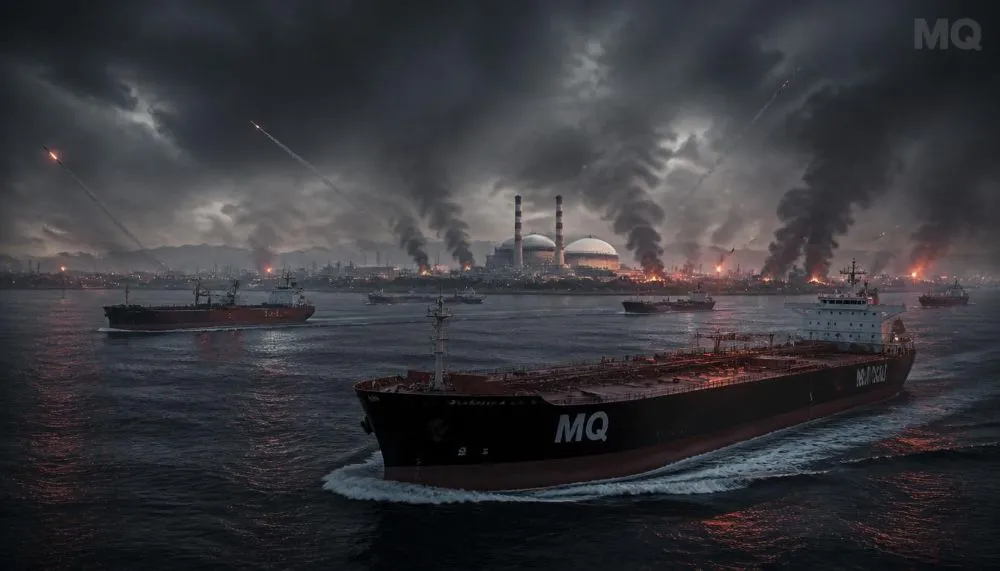
Straight up, the economic damage from this conflict is no longer just a Middle Eastern problem; it is actively threatening Western wallets. Iran’s Revolutionary Guards have reiterated that the strategic Strait of Hormuz remains under their absolute naval control. Shipping data reveals that commercial traffic has plummeted to an all-time low of just five to eight vessels a day, and those ships are forced to navigate strictly through routes cleared by Iranian authorities.
Maritime security experts are calling this the ultimate “worst-case scenario” for global energy markets, with at least nine major tankers coming under direct attack since early July. Because nearly twenty per cent of global energy supplies pass through this single narrow choke point, international analysts are warning that petrol and diesel costs across Europe could skyrocket if this naval blockade drags on for another few weeks.
This shipping ban is also creating proper chaos for major commercial airlines like easyJet and other European budget carriers. With vast stretches of regional airspace now designated as active war zones, commercial flights are being forced to completely redirect their flight paths. This has led to significantly longer travel times, missed connections, and massive spikes in jet fuel expenses that will inevitably be passed down to everyday passengers.
Evolving Defence Partnerships: Pakistan, Kuwait, and the Future of Regional Security
Seeing the massive instability rocking the region, smaller Gulf states are scrambling to secure their own borders. Kuwait, visibly terrified by the proximity of the recent strikes, has immediately opened high-level talks with Pakistan to negotiate an expanded defence pact.
Kuwait is reportedly looking to secure thousands of Pakistani troops, drone units, and advanced air defence systems to protect its own critical infrastructure. For Pakistan, this presents a massive financial opportunity to secure billions of dollars in foreign aid and investments from the wealthy oil nation.
However, this web of defensive pacts is incredibly risky. Pakistan already holds a similar military agreement with Saudi Arabia. As Houthi forces launch heavy retaliatory strikes inside Saudi territory, the Pakistani leadership finds itself caught in an incredibly tight spot, even warning Tehran that an attack on Saudi sovereignty would force a direct military response from Islamabad.
Conclusion: Are We Looking at a Total Point of No Return?
To be fair, the moment a military escalation moves from tactical border skirmishes to cutting off global oil supply lines, targeting nuclear infrastructure buried inside Pickaxe Mountain, and dragging nuclear-armed nations like Pakistan into the mix, it stops being a local political story.
Russia’s Foreign Minister, Sergey Lavrov, hit the nail on the head recently when he pointed out that several global actors are actively trying to poison the relationship between Iran and the Arab states to prevent regional peace. He warned that if these deep strikes continue and transport paths like the Bab-el-Mandeb are also locked down, the global economy will face an unprecedented collapse. If the leadership on both sides doesn’t start moving toward technical-level talks to restore a ceasefire soon, things are going to get properly messy for absolutely everyone.
What do you lot think? Is this US refuelling move the final logistical setup for a full-scale strike on Iran’s nuclear sites, or is it just another massive show of force to drag everyone to the negotiating table?
Frequently Asked Questions
Is the US actually planning to strike Iran’s secret nuclear sites?
Honestly, yes, according to the latest intelligence leaks. The reports show that the US is planning major bunker-busting operations. They are specifically targeting secret facilities hidden inside the deep valleys of Pickaxe Mountain. The whole goal is to bury their enriched uranium so deep underground that the nuclear programme becomes completely useless.
Why is the US sending refuelling planes to Israel if Trump and Netanyahu are arguing?
Look, the politics look proper messy right now. Axios revealed that the Trump team has been ghosting Netanyahu over a clash about F-35 jet sales to Turkey. But the military machine does not care about personal arguments. Reports from The Times of Israel confirm that Washington is moving dozens of KC-4 refuelling planes straight to Ben Gurion Airport, even draining tankers from other Arab bases. While diplomatic talks may continue behind closed doors, preparations for long-range bombing operations are moving forward without pause.
Did Iranian forces really kill or capture US troops at the al-Tanf Garrison?
Straight up, no. Iranian local forces and state media claimed they launched a massive overnight attack and completely overran the base. But US Central Command stepped in immediately to clear the air. CENTCOM issued a direct statement confirming the claim is entirely false and just pure wartime propaganda. No American personnel were harmed or captured.
How bad is the shipping blockade in the Strait of Hormuz?
To be fair, it is turning into a total nightmare for global trade. CNBC reported that maritime risk experts are calling this the ultimate worst-case scenario. Iran has taken absolute naval control of the area, and commercial traffic has plummeted to just five to eight ships a day. With at least nine major tankers attacked since early July, experts are warning that petrol and diesel costs across Europe could skyrocket if the ban drags on.
Why is Kuwait suddenly trying to get a defence deal with Pakistan?
Kuwait is properly terrified by how close the recent missile strikes landed and the massive damage to regional infrastructure. They immediately opened high-level talks with Pakistan to bring in thousands of troops, drone units, and advanced air defence systems. Pakistan gets billions in foreign investments, but it is incredibly risky because they are already tied to Saudi Arabia, which puts it right in the crosshairs if things get even worse.