- Iran vs USA War Day 15: Russian Satellite Intel Exposed, Israel’s $1B Push, and Red Sea Coalitions
- What Actually Stopped the Bombing Run?
- Ukraine Claims Russian Satellites Are Feeding Intel to Iran
- Secret Meetings in Tehran as Oman Steps In
- Netanyahu’s White House Strategy & Israel’s $1B Influence Push
- Red Sea Front: Houthi Attacks, Coalition Strikes, and Yemen Sanctions
- US-Turkey F-35 Standoff and Media Controversy
- Extreme Contingencies and Mysterious Local Blasts
- Ship Attacks, Hormuz MoU, and Seaborne Rescues
- War Accounting: How Iranian Oil Kept Flowing
- Key Takeaways and Conflict FAQ
- Why did President Trump pause the air campaign against Iran?
- What are the main points regarding Russian satellite imagery?
- What did the Quincy Institute’s report, The Eighth Front, reveal about Israel’s foreign influence and FARA spending in the U.S.?
- Where does the US stand on delivering F-35s to Turkey?
- How did Yemen’s representative describe the Red Sea attacks?
- How are backchannel talks through Oman progressing?
- Were Indian crew members safely brought to shore?
- What were Iran’s reported oil revenues during the conflict?
Iran vs USA War Day 15: Russian Satellite Intel Exposed, Israel’s $1B Push, and Red Sea Coalitions
Day 15 of the Middle East conflict delivered a sudden shift that caught military observers around the globe off guard. Following the heavy escalations on Day 14 and Day 15, Washington abruptly halted its flight missions over the weekend. US President Donald Trump decided against greenlighting a broader campaign across Iranian territory.
This pause didn’t stem from sudden goodwill. Real-time tactical limits brought directly to White House officials forced a quick pivot in planning.
What Actually Stopped the Bombing Run?
Two weeks of relentless missile exchanges and drone interceptions stretched Western military inventory thin across the Middle East. Top Pentagon brass warned political leaders that expanding the air campaign meant taking a massive gamble on remaining air defenses. Stockpiles of Patriot antimissile interceptors reached a critical tipping point.
According to reporting by The New York Times, General Dan Caine, Chairman of the US Joint Chiefs of Staff, privately briefed leadership on the numbers. He noted that while large-scale combat operations remained feasible, they would place severe strain on interceptor allocations meant for US Central Command. Internal figures show the Pentagon used over 1,200 Patriot interceptor missiles, each priced near $4 million.
Military strategists interviewed by The Hill and The Atlantic highlight a basic risk: running an intense air campaign without a steady supply of interceptors leaves American bases, regional allies, and oil infrastructure completely open to incoming ballistic strikes.
Ukraine Claims Russian Satellites Are Feeding Intel to Iran
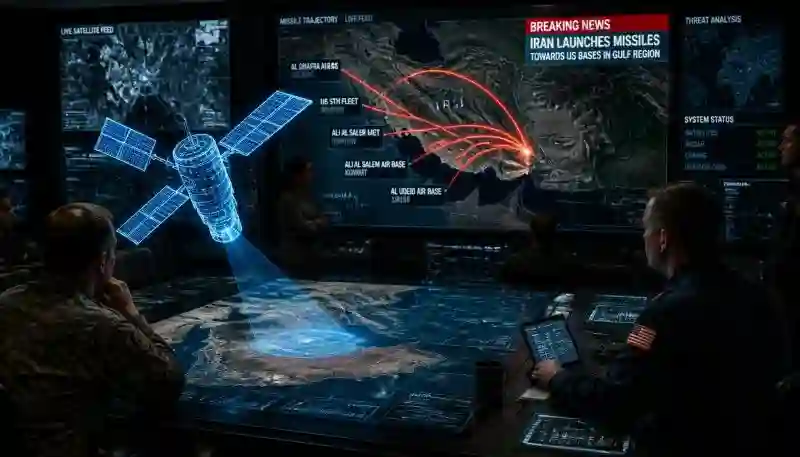
A major intelligence bombshell emerged from Kyiv regarding the nature of Iranian targeting precision. According to statement releases by Volodymyr Zelenskyy, Ukrainian intelligence tracked active Russian satellite surveillance targeting Gulf states and US military outposts in the region.
Zelenskyy instructed intelligence teams to share data showing a direct correlation between Russian satellite imagery and Iranian strike timing—both before the attacks for targeting and afterward for damage assessment. Specific imagery collection was logged over air bases in Bahrain, Jordan, and Kuwait.
Secret Meetings in Tehran as Oman Steps In
While jets sat on the tarmac over the weekend, negotiators rushed to fill the gap. As confirmed by CBS News, Omani diplomats flew straight into Tehran for emergency sessions focused on maritime safety and easing naval tension near the Strait of Hormuz.
Defense units in Israel stood ready for a massive wave of US strikes between Friday and Saturday, according to coverage from Ynet Global. Yet as Qatar and Oman urged both sides toward compromise, Washington chose to test whether backchannel mediation could yield results before upcoming diplomatic meetings in DC.
Reports from Al Jazeera confirm that while diplomatic notes keep moving back and forth between Washington and Tehran through intermediary channels, deep distrust continues to stall any firm deal.
Netanyahu’s White House Strategy & Israel’s $1B Influence Push
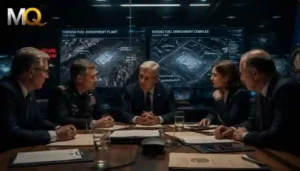
Ahead of his scheduled Tuesday meeting with President Trump, Israeli Prime Minister Benjamin Netanyahu is set to present fresh intelligence regarding Iran’s nuclear recovery efforts, according to The Times of Israel. Israeli officials maintain that wartime acceleration of nuclear capabilities under wartime leadership requires an immediate response.
At the same time, an exhaustive paper titled “The Eighth Front” from the Quincy Institute for Responsible Statecraft dropped some eye-opening data. It showed Israel spending upward of $1 billion on US public diplomacy and foreign lobbying operations since late 2023. The study breaks down how FARA-registered lobbying, AI dataset integration, and organized social media networks were used to guide public conversation across Western media.
Red Sea Front: Houthi Attacks, Coalition Strikes, and Yemen Sanctions

Tensions across the Red Sea corridor and the Bab el-Mandeb Strait keep putting severe pressure on global trade routes. Speaking on a panel at the Middle East Institute, Yemen’s ambassador to the US, Jamil Ali Raja, noted that recent Houthi maritime disruptions fit within a broader Iranian push for regional influence rather than local interests. These persistent shipping hits have cost Yemen roughly $6 billion in lost energy revenues over recent years.
Following those strikes against commercial oil vessels, combined military units from the Saudi-led coalition launched targeted counter-operations against Houthi military positions near Hodeida, as covered by Deutsche Welle and Al Jazeera.
When asked about the sudden flare-up, Iranian Foreign Minister Abbas Araghchi insisted in a CBS News interview that military action won’t resolve the Yemen standoff, urging all parties to return to diplomatic channels.
US-Turkey F-35 Standoff and Media Controversy
Looking at NATO dynamics, The Times of Israel noted that the US State Department officially notified lawmakers that Turkey still doesn’t satisfy the legal requirements to buy F-35 fighter jets. Even with President Trump expressing interest in a potential agreement, formal policy remains tied to CAATSA regulations until Ankara fully removes its Russian S-400 missile systems.
Concurrently, internal disagreement regarding war coverage generated significant friction within major media organizations. Citing former 60 Minutes correspondent Cecilia Vega, an MS NOW report indicated that executive leadership exerted pressure on reporting teams to compromise editorial neutrality by introducing politically biased and unsubstantiated material into airwaves.
Extreme Contingencies and Mysterious Local Blasts
A break in airstrikes hasn’t slowed down behind-the-scenes planning. An exclusive New York Post report reveals that U.S. Defense planners systematically modeled high-intensity ground combat operations. One proposal included a high-risk raid aimed at securing enriched uranium directly from heavily guarded underground nuclear sites—an operation military insiders label as one of the most daring concepts on paper.
Concurrently, intelligence assessments highlight explicit CIA warnings regarding potential Iranian threats aimed at senior U.S. advisers and administration personnel. Meanwhile, reports from The Telegraph highlighted covert threats involving IRGC’s Unit 700, alleging attempts to slip operatives into the UK via small boat migrant channels across the English Channel.
In the region, local media in the Gulf noted that nations like Bahrain and Kuwait have sought increased regional security alignments amid the growing Iranian threat. Meanwhile, mystery surrounds explosions reported near Iran’s coastal hub of Bandar Abbas, though senior American military spokespersons cited by N12 News issued immediate denials.
Ship Attacks, Hormuz MoU, and Seaborne Rescues
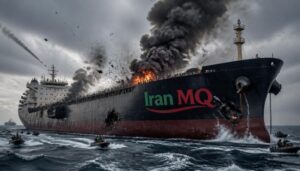
Maritime security disputes flared after Iranian Foreign Minister Abbas Araghchi formally opposed U.S. initiatives to introduce secondary transit channels in the Strait of Hormuz. Tehran characterized the establishment of these parallel shipping routes as a clear violation of established bilateral understandings.
Even with military vessels patrolling nearby, emergency rescue efforts moved quickly when needed. Al Jazeera detailed how a Mozambique-registered commercial tanker named DISHA sent out an urgent distress call after being targeted near Iranian waters. Local Iranian maritime teams responded immediately, guiding all 28 Indian crew members safely to shore.
War Accounting: How Iranian Oil Kept Flowing
International trade blocks and active military conflict haven’t completely shut down Tehran’s crude exports. Financial updates published by The Times of Israel cited Iranian Oil Minister Mohsen Paknejad claiming $11 billion in crude oil sales during active combat phases, plus an additional $6.5 billion secured during temporary truce periods.
By drawing on deep offshore reserves and routing shipments through flexible trade routes, Tehran managed to cover a large share of its state energy budget despite constant risks at sea.
Separately, government statements clarified circulating reports, confirming that foreign embassies in the capital have not suspended operations. Authorities confirmed the German Embassy in Tehran remains fully functional and open for routine work.
Key Takeaways and Conflict FAQ
Why did President Trump pause the air campaign against Iran?
Top defense officials warned political leadership that continuing heavy aerial bombardment would drain remaining stocks of Patriot air defense interceptors stationed at Middle Eastern bases, leaving key facilities exposed.
What are the main points regarding Russian satellite imagery?
President Volodymyr Zelenskyy noted that Ukrainian intelligence verified Russian satellites monitoring US military positions across Jordan, Kuwait, and Bahrain. That data was subsequently shared with Iranian units for attack coordination and post-strike checks.
What did the Quincy Institute’s report, The Eighth Front, reveal about Israel’s foreign influence and FARA spending in the U.S.?
The research document “The Eighth Front” outlined more than $1 billion spent on foreign lobbying, AI training data placement, and targeted outreach efforts to shape policy discussions in Western nations.
Where does the US stand on delivering F-35s to Turkey?
As noted in The Times of Israel, federal guidelines still block Turkey from accessing the F-35 program until Ankara completely phases out its Russian-built S-400 missile equipment.
How did Yemen’s representative describe the Red Sea attacks?
In an Al Jazeera report, Yemeni Ambassador Jamil Ali Raja explained that Houthi strikes against shipping lanes align with Iran’s broader strategy, creating over $6 billion in economic damages for Yemen.
How are backchannel talks through Oman progressing?
According to CBS News, diplomatic envoys traveled to Tehran to establish clear communication lines between Washington and Iranian leadership, focusing primarily on maritime safety and preventing clashes in the Strait of Hormuz.
Were Indian crew members safely brought to shore?
Yes, Al Jazeera verified that Iranian rescue boats responded to a distress call from the merchant ship DISHA, bringing all 28 Indian seafarers safely out of harm’s way.
What were Iran’s reported oil revenues during the conflict?
Figures cited by The Times of Israel show Iranian Oil Minister Mohsen Paknejad recording $11 billion during heavy combat phases and another $6.5 billion during quiet windows.