- Escalation Horizon: UK Airbases Open, Pickaxe Mountain Standoff, and Washington’s Deficits
- UK Enters the Fray and the Pickaxe Mountain Standoff
- Casualty Controversies and the Israeli Telegram Backlash
- Washington Under Fire: Leaked Intel and Missile Shortages
- On-the-Ground Realities: Local Fixes and Gulf Strains
Escalation Horizon: UK Airbases Open, Pickaxe Mountain Standoff, and Washington’s Deficits
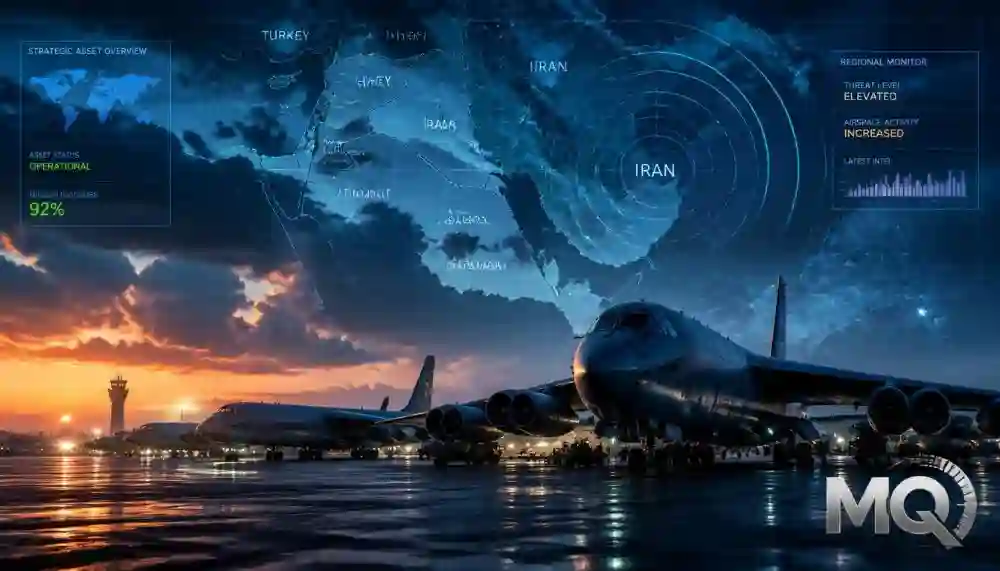
If you’ve been following the regional updates closely over the last day or so, the entire military situation across the Middle East has just taken a massive leap forward. What started as initial reports of phone consultations between Western leaders has now turned into concrete military action, with official updates confirming that UK airbases are open for American heavy strike missions targeting Iran.
The conflict is moving way past localized posturing. From strategic bomber deployments to deep political rifts inside Washington and shocking reactions on social media, here is the full breakdown of what is actually happening on the ground and behind closed doors.
UK Enters the Fray and the Pickaxe Mountain Standoff
Watching US heavy bombers launch directly from British airfields marks a major operational shift. Over at Al Arabiya English, reports confirm that newly appointed UK Prime Minister Burnham formally cleared the use of British military facilities for US air operations directed against Iranian assets.
Naturally, this move drew sharp warnings from Tehran. A recent piece by Reuters highlighted how Iran’s Foreign Ministry explicitly cautioned European nations, including Bulgaria, that allowing US aircraft to operate from their territory turns them into direct targets for retaliation.
At the same time, an intense back-and-forth broke out over Iran’s nuclear facilities. Correspondents for Al Jazeera note that Iranian commanders at Khatam al-Anbiya warned that any direct strike on their nuclear infrastructure would mean an outright expansion of the war.
This warning directly addresses threats made regarding Pickaxe Mountain, a heavily fortified site near Natanz suspected of holding enriched uranium stockpiles. Interestingly, when reporters pressed US leadership on whether hard intelligence proved uranium had already been moved there, officials admitted there was no confirmed public evidence, yet heavy bunker-buster options remain firmly on the table.
Casualty Controversies and the Israeli Telegram Backlash
The tragic human cost of recent drone and missile strikes—including the Jordan air base attack that killed US service members, including US Army Pvt. Isabella Gonzales—has exposed deep, disturbing narrative shifts among key allies.
Investigative pieces published by outlets like The Intercept pointed out severe disagreements over casualty counts, accusing officials of undercounting US military losses across regional bases.
However, the real shock came from online reactions. In large, private Israeli Telegram channels with over 7,000 active members, posts circulating photos of the fallen American female soldier were met with mocking reactions and laughing emojis. Commentators in these groups openly mocked the loss, claiming it was the direct consequence of Trump betraying Israel by attempting to pause or limit the war effort after 41 days.
This reaction highlights a stark reality. Despite decades of unwavering US military backing, radical elements within the allied camp are quick to turn on American leadership and mock fallen US soldiers the moment Washington hesitates to enter a full-blown regional war.
Washington Under Fire: Leaked Intel and Missile Shortages
If you look past the sensational news, spiking costs are turning U.S. politics into a pressure cooker.
A major investigation published by The Washington Post revealed leaked US intelligence assessments showing that top agencies believe heavy air strikes will not force Tehran to back down or soften its demands. At the same time, statements covered by CBS News show Democratic leaders like Senator Chuck Schumer pushing for forced votes in the Senate to limit executive war powers and bring American troops home, arguing that dragging out the conflict puts service members in severe danger.
The financial and operational reality is getting equally grim. Coverage in The Guardian highlighted that Defense Secretary Pete Hegseth faced heavy questioning over an additional $87.6 billion request for the war effort, on top of tens of billions already spent. Furthermore, reporting by The Telegraph exposed internal Pentagon fears that US air defenses are running low on critical missile interceptors. Planners know using multi-million-dollar interceptors to fight off daily drone and missile salvos isn’t sustainable long-term.
On-the-Ground Realities: Local Fixes and Gulf Strains
On the ground inside Iran, civilian engineering is filling the gap left by damaged infrastructure. Following precision strikes that knocked out regional bridges, local villagers and engineering crews were spotted using improvised equipment—dragging heavy tire rigs over rough dirt tracks—to flatten alternate bypass routes so civilian traffic and military supplies keep moving.
Politically, Tehran is keeping its lines tight. Iranian President Pezeshkian confirmed that daily coordination with Supreme Leader Ali Khamenei is increasing to manage domestic stability. Meanwhile, Iran’s Interior Minister traveled to Islamabad, carrying direct messages to Pakistani Prime Minister Shehbaz Sharif regarding border readiness.
In the Gulf, frustration is reaching a boiling point:
An analysis by The Irish Times noted that Kuwait, still carrying memories of the 1990 invasion, finds itself acting as a primary soft target for regional strikes due to the high density of US military assets stationed there.
Across regional networks, comments from Israel’s Finance Minister signaled that Israel would prefer to stay out of a direct, drawn-out war between Washington and Tehran, leaving US forces to bear the primary burden. Meanwhile, reports in The Times of Israel noted that Vice President JD Vance’s office flatly denied claims that high-level officials blocked meetings with Israeli leadership, calling such reports complete fabrications.
FAQ: Quick Breakdown of the Regional Standoff
Has Britain officially allowed US bombers to launch strikes from its territory?
Mounting economic pressures are steadily fracturing the nation’s political core beneath the surface of daily news.
What is happening regarding the fallen US female soldier in Jordan?
The casualties among U.S. forces in Jordan spurred intense public fallout, as detailed by The Intercept and circulating online posts. The soldier’s death drew sharp ridicule in prominent Israeli Telegram channels, where members framed the American casualty as proof that Washington’s cautious regional strategy was failing.
What is the issue surrounding Pickaxe Mountain?
As detailed by Al Jazeera, US leadership threatened heavy strikes on Pickaxe Mountain near Natanz over suspected uranium stockpiles, even while intelligence officials admitted public proof of recent uranium transfers remains unverified.
Is the US military facing interceptor shortages?
According to reports in The Telegraph and budget hearings covered by The Guardian, the Pentagon is facing significant missile defense deficits and has requested an additional $87.6 billion to sustain operations.