Cross-border confrontations across the southern Arabian Peninsula reached a critical turning point this Friday, 18 September 2026. The wider Middle East crisis intensified significantly after intense clashes between Ansar Allah forces and coalition units coincided with urgent diplomatic requests for external air defence ammunition. With energy corridors along the Red Sea facing operational uncertainty, international capitals are pushing backchannel mediation to prevent commercial shipping corridors from grinding to a halt.
Interception Depletion and Regional Border Engagements
Ground monitors and defence departments documented sharp escalation across contested sectors:
Saudi military representatives approached regional partners and Western allies seeking emergency transfers of surface-to-air interceptor rounds as domestic Patriot stockpiles face heavy depletion (Associated Press).
Ground battles in southwestern Yemen between Ansar Allah fighters and government forces backed by regional air power resulted in sixty-three casualties over a twenty-four-hour period (Firstpost).
Civilian rescue teams in Taif reported that fragments from an intercepted uncrewed aerial vehicle came down across an eastern district, causing property damage (CBS News).
Human rights monitors in Taiz documented fatal artillery strikes on residential sectors that left three children dead, prompting condemnation from municipal authorities (CBS News).
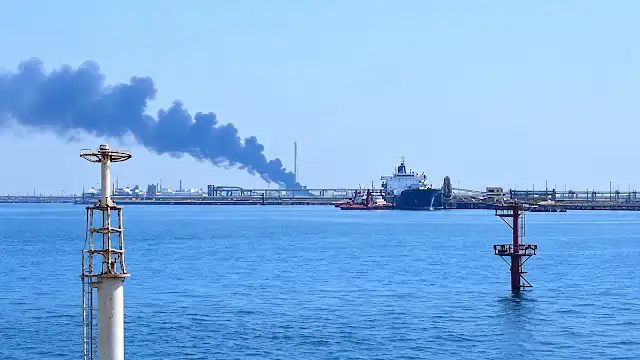
Coastal logistics desks reported smoke plumes rising near maritime petroleum facilities close to Yanbu following low-altitude drone interceptions (Reuters).
Satellite reconnaissance over coastal sectors near the Bab-el-Mandeb strait showed newly constructed deep trench barriers aimed at obstructing overland armoured movements (Associated Press).
Multilateral Pressures and Holy Site Controversies
Diplomatic exchanges grew exceptionally heated over claims regarding airspace corridors near sacred sites:
Iranian Foreign Ministry spokesperson Esmaeil Baqaei issued an official statement strongly condemning any potential aggression against Islamic holy sites in Mecca and Medina, while dismissing accusations against regional groups as politically motivated false flag operations (Press TV).
Ansar Allah leader Abdul-Malik al-Houthi addressed public channels, rejecting allegations that sacred boundaries were targeted and describing the reports as coordinated media manipulation (Al Jazeera).
Officials from the European Union issued a formal statement urging Ansar Allah commanders to halt cross-border military campaigns immediately to preserve chances for political dialogue (Al Jazeera).
Turkish defence representatives condemned drone actions directed towards regional population centres during a televised military briefing in Ankara (Anadolu Agency).
Security discussions in Tel Aviv confirmed that Israeli security channels offered technical intelligence support to Gulf counterparts while encouraging firmer action against coastal drone launching nodes (Channel 12).
Backchannel Diplomacy and Energy Transit Bottlenecks
Envoys across Asia worked through backchannels to protect vital commercial shipping lines:
Beijing representatives held urgent discussions with Iranian diplomats after direct communications from Riyadh asked Tehran to encourage restraint along southern maritime corridors (NDTV).
Pakistani defence officials reviewed commitments under regional security frameworks, emphasizing that historic protection agreements remain focused solely on territorial defense rather than offensive regional interventions (Associated Press of Pakistan).
Commercial maritime registries noted that insurance surcharges for bulk cargo vessels transiting the lower Red Sea rose another 15% within 48 hours (Lloyd’s List).
Diplomatic intermediaries from Muscat continued conveying messages regarding a prospective two-week temporary truce to facilitate emergency humanitarian shipments (Al Jazeera).
Regional freight hauliers reported increasing customs delays along northern Gulf land borders as security teams stepped up inspections on heavy commercial convoys (Reuters).
Questions and Answers
Why did Saudi Arabia request emergency missile defence aid?
Persistent drone and rocket barrages have depleted existing stockpiles of Patriot interceptors, pushing defence officials to seek replenishments from international allies (Associated Press).
What was Iran’s official response to allegations concerning Mecca?
Spokesperson Esmaeil Baqaei affirmed that targeting sacred sites is completely unacceptable, cautioning that unverified claims risk serving as false flag distractions (Press TV).
How heavy was the casualty toll in recent Yemen clashes?
Field reports confirmed that at least sixty-three fighters and personnel were killed across southern battlefronts within a single day (Firstpost).
What diplomatic role did China take regarding the southern shipping corridor?
Following outreach from Riyadh, Chinese diplomats asked Iranian counterparts to support dialogue and help de-escalate maritime actions near the Bab-el-Mandeb (NDTV).
What did the European Union state regarding cross-border actions?
The EU called on Ansar Allah units to halt all offensive strikes against regional infrastructure, stressing that dialogue remains the only viable path to peace (Al Jazeera).
Did intercepted debris cause damage inside Saudi territory?
Yes. Civil defence services confirmed that falling wreckage from intercepted aerial platforms damaged structures in the Taif governorate (CBS News).